The best time to visit Koh Phangan, month by month
Koh Phangan's weather runs on a different clock to Phuket's. Here's how each month really feels, plus party dates, festivals and when to book.
The short answer: the best time to visit Koh Phangan is from late December to April, when the sea is calm and rain is rare. February is usually the driest month of all. June to September is a strong second choice, and quieter: the Gulf islands stay mostly dry while the rest of Thailand gets wet. The months to plan around are October and November, plus the first weeks of December, when the north-east monsoon brings the year's heavy rain.
If you have checked the weather for Phuket or Krabi, set it aside. Koh Phangan sits in the Gulf of Thailand, and its seasons run on a different clock.
Why Koh Phangan's weather is different
Most of Thailand gets its rain from the south-west monsoon, roughly May to October. Koh Phangan, Koh Samui and Koh Tao sit on the other side of the peninsula, which shields them from much of that. They take their heavy rain later in the year, when the north-east monsoon blows across the open Gulf, mainly from mid-October to early December.
Nobody publishes official climate normals for Koh Phangan itself, so the figures below come from the Thai Meteorological Department station on Koh Samui, about 15 km away across the water. They are the 1991–2020 averages published by the World Meteorological Organization. Estimates for Phangan itself run a little higher in November, but the pattern is the same.
Best time to visit Koh Phangan: weather month by month
| Month | Avg high | Rain | Rainy days | Sea temp | What it's like |
|---|---|---|---|---|---|
| January | 29°C | 127 mm | 8 | ~28°C | Fresh, breezy start; last showers clear early in the month. High season |
| February | 29°C | 64 mm | 4 | ~28°C | Driest month. Clear skies, calm west coast. High season |
| March | 30°C | 116 mm | 5 | ~29°C | Sunny, with the odd heavy downpour. High season |
| April | 32°C | 83 mm | 6 | ~30°C | Hottest, stillest weeks; Songkran mid-month. High season |
| May | 33°C | 132 mm | 11 | ~31°C | Hot, with short afternoon storms. Shoulder |
| June | 33°C | 134 mm | 10 | ~30°C | Bright mornings, quick showers. Shoulder, good value |
| July | 32°C | 117 mm | 11 | ~30°C | Mostly sunny; European holidays begin. Busy |
| August | 32°C | 102 mm | 11 | ~30°C | Similar to July and one of the busiest months |
| September | 32°C | 118 mm | 11 | ~29.5°C | Quiet and warm, a favourite with regulars. Shoulder |
| October | 31°C | 295 mm | 16 | ~29°C | Monsoon arrives, usually late-day rain. Low season |
| November | 30°C | 445 mm | 17 | ~29°C | Wettest month, with grey spells and rough seas. Low season |
| December | 29°C | 263 mm | 12 | ~28°C | Wet first half, often lovely by Christmas. Peak from ~20 Dec |
Rain and temperature: Koh Samui station, WMO 1991–2020 normals (a rainy day means 1 mm or more). Sea temperatures are approximate monthly averages. Weather varies year to year, so check the forecast before you travel.
A few things the averages don't show:
- Rain usually comes in bursts. Even in the shoulder months, a typical wet day means a heavy shower for an hour, then sun.
- March's figure is misleading. It looks wetter than April, but that's usually one or two big storms on very few days.
- The heat builds through April and May. Highs reach 33°C and the air is still. Mornings and late afternoons are the time to be on the beach.
Sea conditions on the west coast
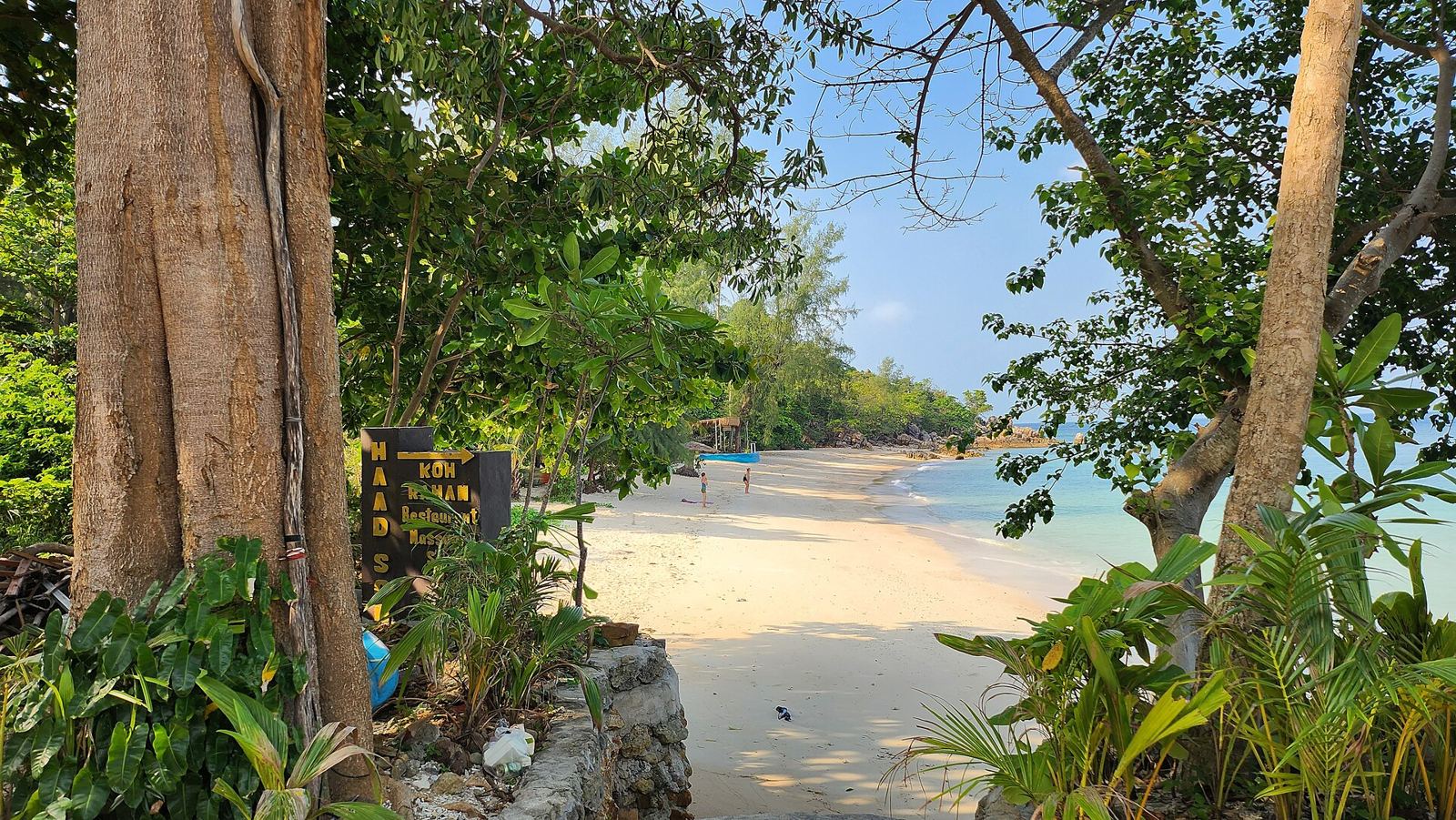
The west coast, from Thong Sala up through Wok Tum, Hin Kong, Srithanu and Haad Yao, faces Koh Samui and the mainland. That brings two seasonal advantages:
- Shelter in the monsoon. The north-east monsoon hits the east and north-east coasts hardest, around Thong Nai Pan and Bottle Beach, where longtail boat trips are often called off for rough seas in the wet months. The west coast is in the lee of the island, so even in the wet months the water here is usually flatter.
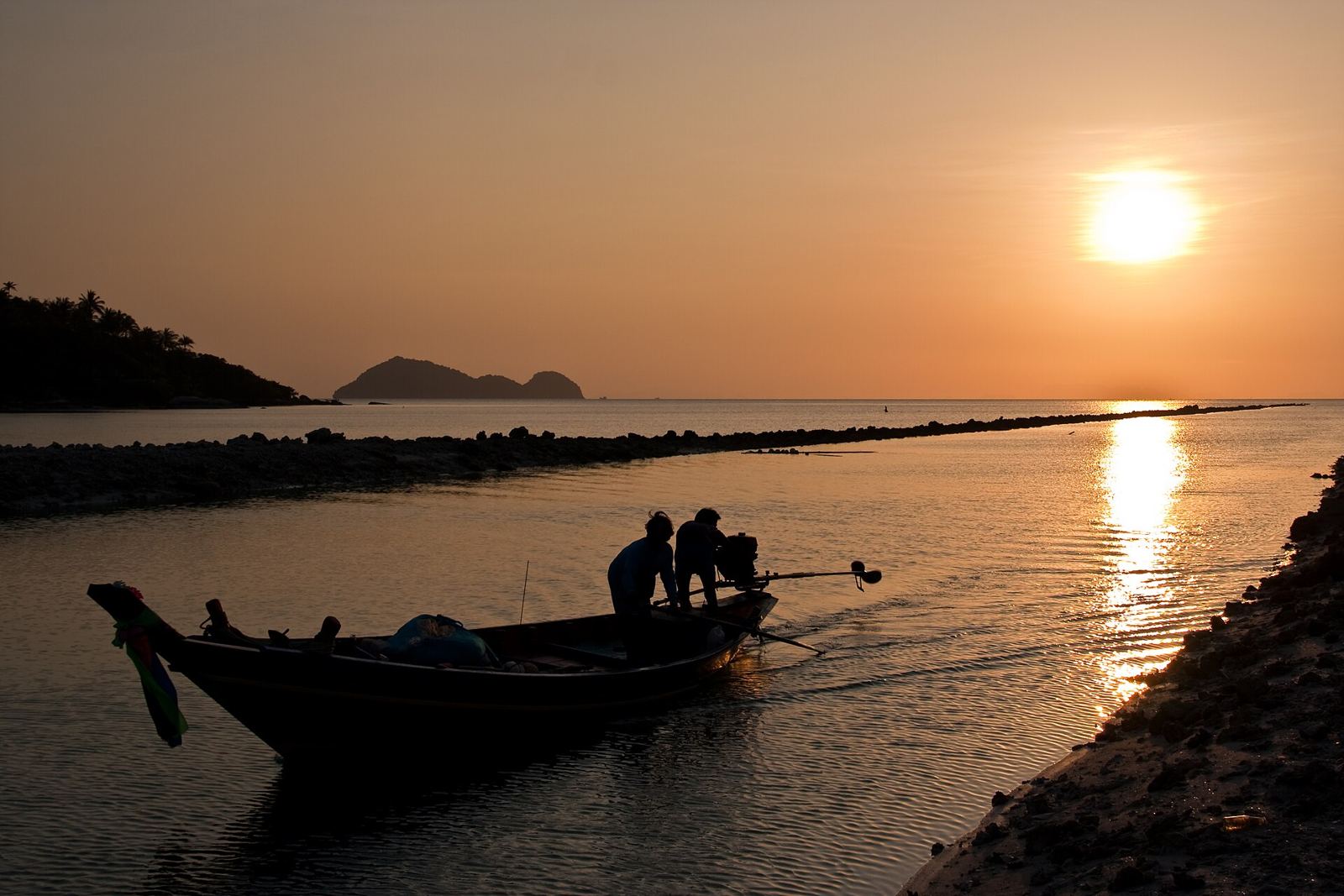
- Sunsets all year. This is the side where the sun goes down over the sea. Our best sunset spots guide has the bars and beaches to watch it from.
The trade-off is the tide. A shallow reef runs along much of the west coast, and from roughly May to October the lowest tides fall during the day. At low tide, beaches like Hin Kong and Srithanu become wide sand flats and seagrass, which is great for walking but hard for swimming. From about November to April, high tides fall at more useful hours. Whatever the month, check a tide table and swim on the rising or high tide. Haad Son and Haad Yao, a little further north, generally have deeper water close to shore. Our west coast beach guide goes beach by beach.
Full Moon Party dates and why they matter even if you're not going
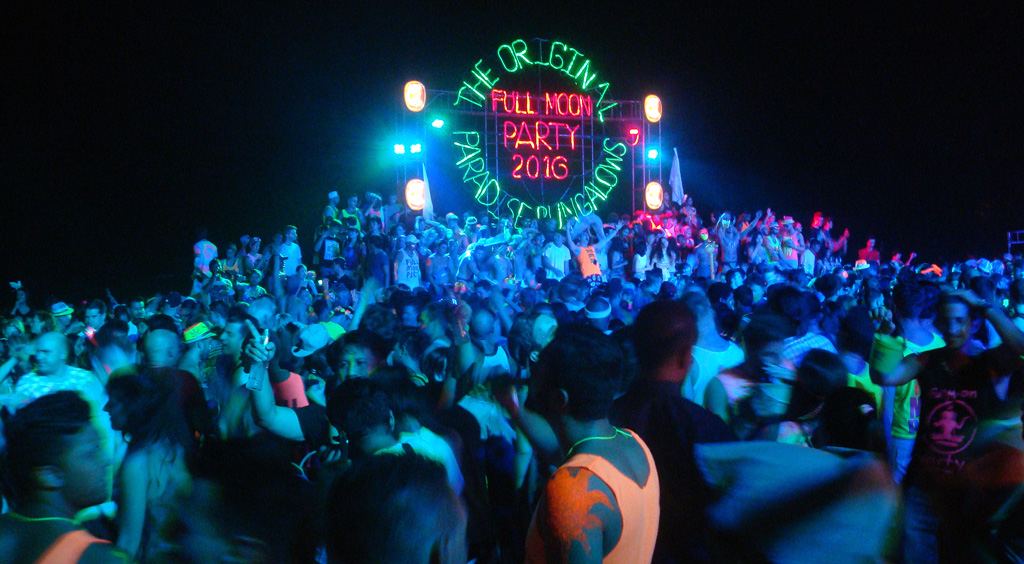
The Full Moon Party takes place on Haad Rin Sunrise Beach, at the island's south-east tip, about half an hour from Wok Tum. You won't hear it on the west coast. But for three or four days around each party, the Samui–Phangan ferries fill up, the night boat sells out and accommodation prices rise across the island. If you're after a quiet stay, avoid arriving or leaving on party day. If you're going, book boats and beds early.
Published dates as of October 2026 (the entry fee is THB 200, cash):
- 27 October 2026: moved a day from the full moon because of Ok Phansa, when alcohol sales are restricted (one schedule still lists 26 October, so check)
- 24 November 2026: the same night as Loy Krathong
- 24 December 2026: Christmas Eve
- 31 December 2026: the New Year's Eve party, the biggest of the year
- 22 January, 22 February and 22 March 2027: the February date is moved for Makha Bucha
The Haad Rin Business Association sets the dates, and they can move a day or two around Buddhist holidays. Always confirm on the official schedule before you book flights.
Festivals and holidays worth planning around
- Songkran (13–15 April): Thai New Year. Expect water fights in the towns and busy ferries as Thais travel home and to the islands.
- Ok Phansa (26 October 2026): the end of Buddhist Lent and one of the national days when alcohol sales are restricted. Shops and bars stop selling for the day, although licensed hotels and some tourist venues are exempt.
- Loy Krathong (24 November 2026): krathongs (small floating offerings) are released on the sea and in ponds on the full moon of the twelfth lunar month. It's one of the prettiest nights of the year, even in the rain.
- Christmas and New Year (about 20 December to 5 January): the most in-demand fortnight of the year on every island in the Gulf.
- Chinese New Year (6 February 2027): a busy week across Samui and Phangan.
- European summer holidays (July and August): the second peak, when families fill the island.
High season, low season and villa availability
| Season | Months | Weather | Crowds and prices |
|---|---|---|---|
| Peak | ~20 Dec – early Jan | Usually drying out | Highest prices; book months ahead |
| High | Jan – Apr | Driest, sunniest | Busy; book early for February and March |
| Second high | Jul – Aug | Mostly dry, hot | Busy with families and European holidays |
| Shoulder | May – Jun, Sep | Hot, short showers | Good value, quieter beaches |
| Low | Oct – Nov (to mid-Dec) | Monsoon rain | Lowest prices, most choice, some closures |
For private villas, the pattern is simple. In the peak and high months the best places go first, so book months ahead for the Christmas fortnight, February, March and August, and plan around Full Moon week if your dates are flexible. In the shoulder and low months you'll have more choice and can often book with only a few weeks' notice.
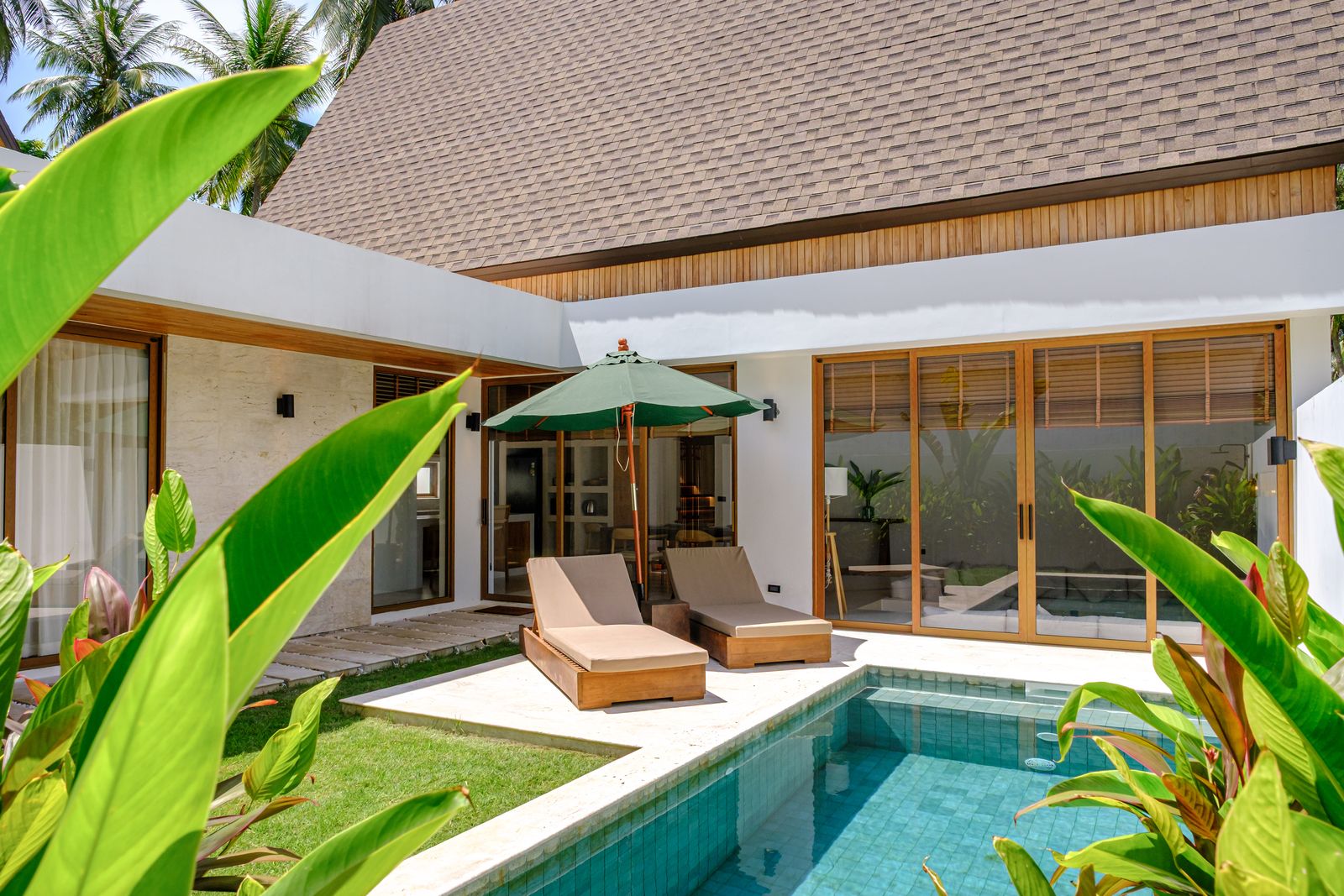
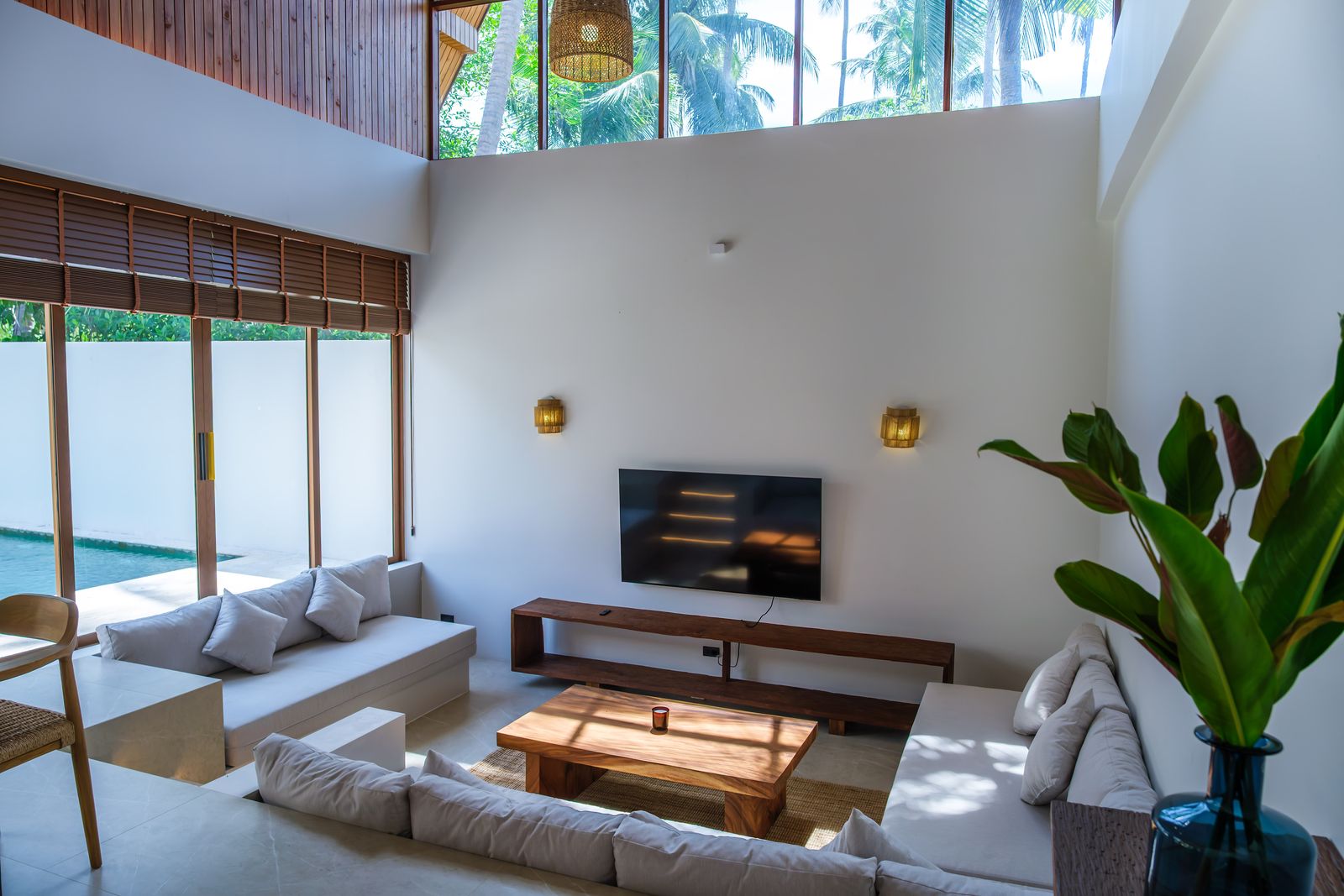
At Mira, the first of our six villas are open now, and more open over the coming months. Each villa has its own pool, a covered terrace and air-conditioning throughout, which makes a rainy November afternoon a pleasure rather than a problem. The minimum stay is three nights. If you're aiming for Christmas, New Year or a Full Moon week, message us early and we'll tell you what's free.
Travelling in the wet months: what actually changes
If October or November are your only dates, don't write them off. Here's what changes in practice:
- Ferries: most days run normally, but the Marine Department can suspend sailings during severe storms. Don't plan a same-day ferry and international flight. Spend your last night on Samui or near the airport if your connection is tight.
- Roads: heavy rain makes the island's steeper roads slippery and some dirt tracks impassable. If you don't ride a scooter regularly, this isn't the time to learn. Taxis are easy to find in Thong Sala.
- Beaches and boat trips: east-coast boat trips are the first to be cancelled. West-coast beaches stay usable between showers, and the light after a storm is often the best of the day.
- What to pack: a light rain jacket, quick-dry clothes, a dry bag for your phone, and insect repellent, as mosquitoes thrive after rain.
- The upside: green hills, full waterfalls, quiet restaurants and the most choice of places to stay all year.
Our verdict by type of trip
- First visit, guaranteed sun: February or March.
- Best balance of weather, price and space: June or September.
- Families: July and August work well. Book early, and plan swims around the tides.
- Wellness and slow travel: shoulder months, when the island is calmer. See our wellness, spa and gym guide.
- Rain doesn't bother you: October and November bring the lowest prices and the greenest hills. Leave a buffer day for ferries, as our guide on how to get to Koh Phangan explains.
Know your month? Check dates and book Mira directly, or ask us on WhatsApp what the weather has been doing this week.
Frequently asked questions
What is the best month to visit Koh Phangan?
February is the safest bet, as it's usually the driest month (about 64 mm of rain on roughly four days in the 1991–2020 Koh Samui record). March and April are also excellent but hotter. If you want sunshine with fewer crowds and lower prices, consider June or September.
When is the rainy season on Koh Phangan?
Mainly October to early December, which is different from Phuket and the Andaman coast. November is the wettest month, averaging around 445 mm at the nearby Koh Samui weather station, and October and December also run above 250 mm. From May to September there are short showers, but the islands stay relatively dry.
Is Koh Phangan good to visit in July and August?
Yes. While the Andaman coast takes the south-west monsoon, the Gulf islands see only about 100–120 mm of rain a month, mostly in short bursts. It's hot (highs around 32°C) and busy with European summer holidays, so book early.
When is the next Full Moon Party?
As of October 2026, the published dates are 27 October (moved a day for Ok Phansa), 24 November and 24 December 2026, plus a New Year's Eve party on 31 December, then 22 January, 22 February and 22 March 2027. Dates can shift around Buddhist holidays, so check the official schedule before booking.
Is the sea calm on the west coast of Koh Phangan?
Generally, yes. The west coast faces Koh Samui and the mainland and is sheltered from the north-east monsoon. Its main quirk is the tide. From roughly May to October, daytime low tides expose wide sand flats on beaches like Hin Kong and Srithanu, so plan swims around high tide.
Photo credits